

Florida has been one of America’s biggest real estate success stories for years. Thousands of people moved to the state looking for warmer weather, lower taxes, retirement opportunities, and relatively affordable housing.
But the market has changed.
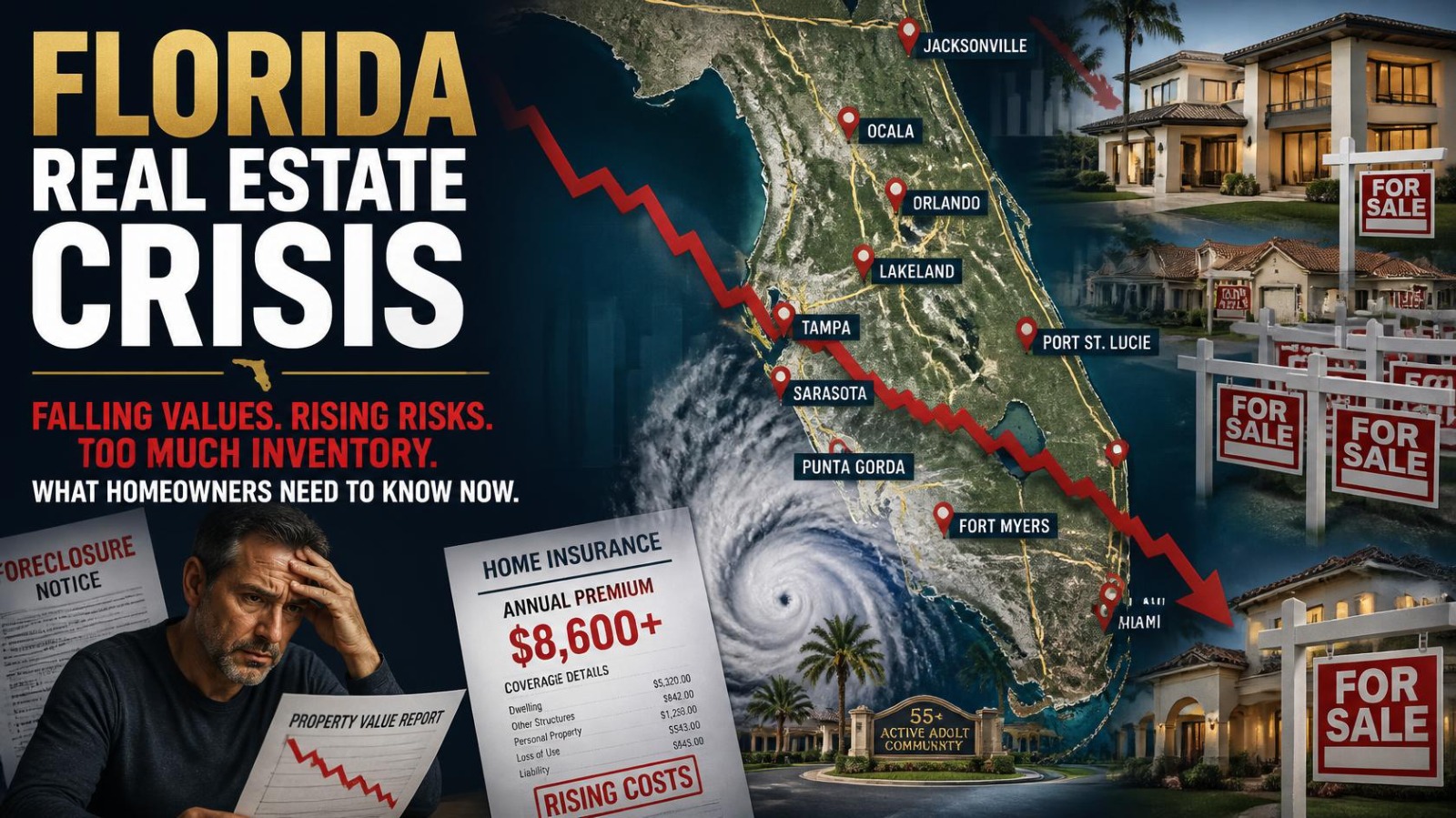
According to the provided analysis, Florida’s domestic migration has fallen dramatically, while insurance costs, inventory, taxes, and foreclosure activity are creating new pressure on homeowners and investors. Some markets are stabilizing, but others are still losing value.
Here are 10 Florida cities showing some of the strongest warning signs heading into 2026.
1. Orlando — A Quiet Correction
Orlando may not look like a collapsing market, but the warning signs are becoming harder to ignore.
The median home price was around $380,000 in December 2025, while the analysis points to a decline of roughly 4% from the metro’s mid-2025 peak.
More importantly, homes are taking longer to sell. Average market time increased from approximately 58 days to 78 days.
At one point, Orlando also reached nearly eight months of housing supply.
That gives buyers more negotiating power and puts sellers under pressure.
The lesson: Orlando isn’t necessarily crashing, but buyers who purchased near the peak may face a much weaker selling environment.
2. Jacksonville — Affordability Is Disappearing
Jacksonville became popular because it offered a more affordable alternative to expensive Florida markets.
But rapidly increasing ownership costs are changing that advantage.
The analysis puts the median sale price around $282,000, approximately 4.4% lower year-over-year.
Homes are also taking around 85 days to sell.
Property taxes have increased significantly since 2019, while insurance adds another major expense.
For working families, the issue isn’t simply the purchase price anymore.
It’s the total cost of owning the home.
With foreclosure activity also elevated, Jacksonville could face additional pressure if affordability continues deteriorating.
3. Ocala — Growth Doesn’t Always Mean Strength
Ocala is an interesting example because the headline story remains positive.
It has attracted retirees and people looking for cheaper housing outside larger Florida cities.
But underneath the population-growth story, the housing market is showing signs of weakness.
Homes that previously sold in around 37 days are now taking approximately 73 days.
Inventory has also surged dramatically.
This creates a gap between the popular narrative — “Ocala is growing” — and what sellers are experiencing.
Growth doesn’t automatically guarantee rising home values.
Investors need to look beyond migration headlines and examine inventory, selling times, and actual buyer demand.
4. Port St. Lucie — The Affordable Alternative Is Getting Expensive
Port St. Lucie became a popular destination for people leaving more expensive South Florida markets.
But that affordability advantage is shrinking.
The median home price is around $400,000, while the analysis places median household income at roughly $78,000.
Meanwhile, inventory has reached record levels and homes are taking more than 80 days to sell.
Insurance, taxes, and commuting costs further reduce the financial advantage.
The question for buyers is becoming simple:
If the costs are rising, what makes this market different from the expensive markets people originally left?
5. Lakeland — Distress Before Prices
Lakeland’s biggest warning sign isn’t necessarily its home price.
It’s foreclosure activity.
The analysis identifies Lakeland as having one of the highest foreclosure rates among midsize metropolitan areas.
The city became popular as a cheaper option between Tampa and Orlando, attracting both homeowners and investors.
But rising inventory, softer rental demand, and shrinking flipping margins are creating problems for investors.
This is an important warning:
Real estate distress can appear before prices visibly collapse.
Foreclosures and forced sales can become early indicators of future market pressure.
6. Fort Myers — Insurance Is Changing the Equation
Fort Myers remains one of the Florida markets most affected by hurricane risk and insurance costs.
The median home price is around $385,000, but prices vary significantly across neighborhoods.
The analysis highlights substantial declines in some areas from previous peaks.
The biggest issue may be insurance.
Annual premiums in the Cape Coral–Fort Myers area can be extremely expensive, dramatically increasing the true cost of homeownership.
At the same time, new construction continues adding supply.
That creates a difficult situation for existing homeowners:
More homes for sale + expensive insurance + weaker demand = increasing pressure on resale values.
7. North Port–Sarasota — A Major Value Decline
The North Port–Sarasota region is another market showing serious warning signs.
The analysis points to a significant year-over-year decline in home values, with some areas experiencing declines approaching double digits.
Homes are taking more than 100 days to sell.
The condo market is under even greater pressure, with elevated inventory and declining prices.
Insurance costs, hurricane exposure, and excess pandemic-era inventory are all contributing to the correction.
For sellers, this means pricing realistically may be more important than ever.
8. Miami — The Condo Problem
Miami’s real estate market can look extremely strong from the outside.
Luxury sales and international buyers can make headline numbers appear healthier than the broader market.
But the condo segment tells a different story.
The analysis highlights extremely high condo inventory and a major imbalance between sellers and buyers.
Older buildings are also facing increased financial pressure from inspections, structural requirements, reserves, and higher HOA costs.
For some owners, the monthly cost of maintaining a condo has become a major burden.
Miami isn’t one single market.
Luxury properties, single-family homes, and older condos can behave very differently.
9. Tampa — Foreclosures and Storm Damage
Tampa is another market facing multiple pressures simultaneously.
The analysis identifies Tampa as having an exceptionally high foreclosure rate among major U.S. metros.
Property taxes have also increased substantially since 2019.
Then came major hurricane impacts in 2024, adding another layer of uncertainty to coastal and storm-damaged communities.
Some areas experienced significant price declines.
With additional inventory and foreclosure activity entering the market, Tampa’s correction may not be finished yet.
10. Punta Gorda — The Biggest Warning Sign
Punta Gorda is presented as the most severe market in the analysis.
The Southwest Florida retirement community experienced a major pandemic-era housing boom.
But according to the provided transcription, home values have fallen more than 25% from their 2022 peak.
Homes are taking more than 100 days to sell, while additional listings could create even more competition.
Insurance costs are particularly damaging for retirees living on fixed incomes.
When homeowners face dramatically higher insurance expenses while their property values fall, the economics of retirement become much more difficult.
The result is a market where declining values and rising ownership costs can reinforce each other.
The Bigger Florida Real Estate Warning
These 10 markets aren’t being affected by one single problem.
Four major forces are working together:
- Migration has slowed dramatically.
- Insurance remains extremely expensive.
- Housing inventory has increased.
- Foreclosure activity is creating additional pressure.
The most important lesson for buyers and investors is simple:
Don’t judge a Florida real estate market by its past reputation.
A city that was an excellent investment three years ago may have completely different economics today.
Before buying, look at current prices, inventory, insurance, taxes, rental demand, foreclosure activity, and your actual cost of ownership.
Florida real estate isn’t one single market.
It’s a collection of very different markets — and in 2026, knowing the difference could determine whether you protect your money or overpay for a property.
Data matters more than hype.